16 FAST Fat Loss Tips for Results…

Remember there are under 3 months to Christmas, the Turkey’s are getting fatter. Make sure you aren’t confused with a seasonal bird by putting some of these tips in to play to get the results you want…

Tip 1: Drink Herbal Tea

Herbal teas are calorifically low and can suffice to satisfy cravings for sweet foods. Try drinking herbal teas such as green tea blends.

Tip 2: Don’t Drink Alcohol

Alcohol contains empty calories which the body cannot use and will ultimately inhibit fat burning and enhance fat storage, want to lose fat- stop drinking alcohol.

Tip 3: Motivate Yourself

Try to find an incentive for getting in shape and burning fat. Write down your goal and put it in a location you see everyday such as on the refrigerator in the car or on your desk.

Tip 4: Don’t Starve Yourself

Starving only promotes a bigger “rebound” effect  in weight gain especially if you rebound back in to eating larger portions. If you eat small meals every few hours it keeps your metabolism elevated and stops your metabolism from slowing down. However, you organise your daily nutrition, be it three meals a day or six smaller meals, then be consistant with your eating so you can see if your approach is working. Fasting is a strategy being promoted for fast fat loss- while metabolic slow down does not occur for a couple of days this an advanced diet strategy and is usually not necessary to get great results.

Tip 5: Drink Water Before Meals

Not only will this aid digestion but if you have a glass of water 20 minutes before eating it can partially fill the stomach giving you a full feeling so you won’t binge or overeat. Better hydration also means that the body will run more efficently- in turn enhancing energy utilization and fat burning potential.

Tip 6: Be Consistent

Consistency in your diet and training leads to results over a period of time. The approach can be fast or slow but the trick is that over a given period of time consistency is the key to effectiveness of your approach.

Tip 7: Don’t Rely On The Scales

Scale weight is not always reflective of fat loss- it will also show water loss as well as muscle gain. Therefore, individuals may see varied results if they are undertaking a specific diet or are undertaking a new exercise programme. Low carb dieters will easily see 3-4kg in initial weight loss (about 8 pounds) this is not fat loss, this is water and it will be regained as you resume  normal eating patterns.

Tip 8:  Focus

What is your focus and is it realistic? Be real with your goals, write them down and ask the question- Are your actions helping you achieve what you want to? If they are not then rethink your programme and sharpen your focus.

Tip 9:  Weight Training

This will increase your metabolism and improve your fat burning potential at rest for the next 24-48 hours. Increasing your strength levels will mean that you can work harder and at a higher intensity to get greater results.

Tip 10:  Special Fat Loss Supplements

Most don’t work and are supported by poor science and slick marketing. A sensible diet and exercise programme will out do any results caused by a supplement. Supplements or the one’s that work I term as “results accelerators” they are only a small piece of the puzzle though.

Tip 11: Eat Fat to Lose Fat

Good fats or Omega 3 is known to reduce cholesterol, plays a part in fat burning and improve immune system functioning. Simply, if you are not taking an Omega 3 supplement then it could really help your health!

Tip 12: Just Because You Exercise It Doesn’t Mean You Can Eat What You Want.

You cannot out exercise a bad diet- period.

Tip 13:  Low Fat Health Foods Often Contain a Lot of Sugar

Many “health foods” are actually cleverly disguised junk foods that can often contain processed sugars and additives which can affect hormonal balance- always check the food labels to be sure.

Tip 14:  Abdominal Training Does Not Burn Body Fat

There are more effective weighs of losing belly fat and developing toned abdominals. Train your whole body and you will burn fat from the abs as well as developing the musculature in that area.

Tip 15: Build a Diet You Enjoy Otherwise You’re not going to stick with it

Don’t focus on one food, don’t deprive yourself of all treats. Remember it is all about self control limit your intake of treat foods especially if you consider them as “undesirable” when related to your goals.

Tip 16: Get 7-8 Hours of Sleep

Getting a full night’s sleep not only helps you be fit and active but it also improves the ability of your body to deal with carbohydrates, losing sleep can lead to cravings and binge eating.
Why Posture is Important: Part 1…

Why is Neutral Spine Important in All Exercises?

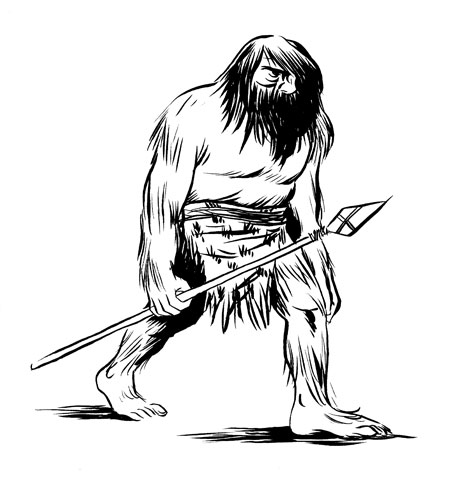
Three natural curves are present in a healthy spine. The neck/ cervical spine, the mid-back/ thoracic spine and the lower back/ lumbar spine. The neutral alignment is important in helping to cushion the spine from too much stress. Learning how to maintain a neutral spine position also helps you move safely during activities like sitting, walking, and lifting- most importantly it also helps you to stop looking like a caveman/ women!!

The natural curves of the spine are the result of the muscles, ligaments, and tendons that attach to the vertebrae of the spine. Without these supporting structures, the spine would collapse. They support the spine – much like guide wires support the mast of a ship. This guide wire system is made up mainly of the abdominal and back muscles. The abdominal muscles provide support by attaching to the ribs, pelvis, and indirectly to the lumbar spine. The muscles of the back are arranged in layers, with each layer playing an important role in balancing the spine. By using these muscles together, it is possible to change the curves of the spine.

Controlling pelvic tilt is one way to begin helping to balance the spine. As certain muscles of the back and abdomen contract, the pelvis rotates. As the pelvis rotates forward, the lumbar curve increases. As the pelvis rotates backward, the curve of the low back straightens. Rotation of the pelvis is like a wheel centred at the hip joint. The muscles of the upper thighs also attach to the pelvis and contraction of these muscles can be used to change the curve of the spine. The abdominal muscles work alone, or with the hamstring muscles to produce a backward rotation of the pelvis. This causes the slight inward curve of the low back to straighten. If these muscles cause the curve of the low back to straighten too much, this may produce an unhealthy slouching posture. In the other direction, as the hip flexors contract and back extensors contract, the pelvis is rotated forward – increasing the curvature of the lower back. If this curve is increased too much, another unhealthy posture may result. This condition is called lordosis in medical terminology or swayback in common terms.

A balance of strength and flexibility is the key to maintaining the neutral spine position. This balance is the basis for optimal muscle function. Like a car, an imbalance may lead to wear and tear, eventually damaging the various parts of the car. Muscle imbalances that affect the spine have many causes. One common cause of muscle imbalance is weak abdominal muscles. As the abdominal muscles sag, the hip flexors become tight, causing an increase in the curve of the low back. This leads to the swayback posture mentioned above. Another common problem results from tight hamstrings. As the hamstring muscles become tight, the pelvis is rotated backwards. This produces an abnormal slouching posture.

This therefore will affect us when we move as postural imbalances will not only affect the position of our lower limbs, it will also affect the position of the spine and upper/ lower back. In Part 2 we will look at simple programme modifications to help improve your posture.

The benefits of uni-lateral training…

Regardless of an individual’s background most people will have a dominant or stronger side of the body. As this side is more dominant, strength, co-ordination and muscle size may vary from the opposite limb. Most exercise programmes related to strength development contain bilateral (both sides of the body) movements such as the Bench Press, Squats and Deadlifts.

If one side of the body is stronger and effectively “out of balance” compared to the opposite then this may accentuate the difference from one side to the other. Typically, this may be shown in that if one leg is stronger than the other during a squat movement and becomes more dominant during the movement, shifting the centre of gravity and causing rotation at or around the pelvis which may place stress on the joints further up or down the body. The negative impact of these imbalances may be highlighted typically in movement flaws and poor technique of bilateral movements. Ultimately these poor movements result in tight overactive muscles and weak underactive muscles with the worst case scenario being injury.

Unilateral training focuses specifically on the opposite sides of the body. The aim of these types of movements is to highlight any potential strength imbalance from side to side and help to level these imbalances out by loading the body equally. The advantages of this type of training protocol can help develop core and postural strength as the body has to stabilize itself against rotation around its centre of gravity through movement. Consider the stabilization the torso musculature has to provide to prevent torso rotation during a single arm row or how much instability there is in a single leg squat compared to a bilateral squat where rotational forces can be stabilized on the opposite leg.

Bi-lateral movements have a greater advantage in that additional load can be placed on the body so for force development they are a vital part of a conditioning programme. This has led to a rather blanket assertion that they are the be all and end all of training. However, this is a limited view point in that uni-lateral movements are just as important as they help address strength imbalances from side to side and can refine technique and issues with range of motion and mobility.

Uni-lateral exercises are challenging in their own right as they demand a greater amount of segmental muscle control and integration of muscular movement compared to bi-lateral movements. A balanced training programme aims to build postural balance between all the muscles of the body. Posture dictates function; therefore function dictates dysfunction- if posture is not correct and there is a strength deficit from one side to the other then dysfunction and injury may occur. Bi-lateral exercises do have their own place in resistance training hierarchy if performed correctly at the right time, as does unilateral training.

Individuals who respond well to including uni-lateral exercises in to their training include those who play in sports that are one side dominant such as kicking or throwing. The training of single limbs is functional from an athletic development point of view as it allows an individual to develop force production in positions where we experience most movements in life as well as sporting situations. For instance, whenever we move or run we are have to balance and change direction of one leg.

10 Years, 10 Lessons…

A decade of training a variety of individual’s for a variety of goals starts to teach you a lot of things. I have had the luck to work with some great personal training clients, focussed fat losers, developing athletes, rehab based physio’s, teams and coaches who have gone on to great things. Most importantly I have worked with some great trainers who have helped me develop my career. This post is basically a celebration of this and lists 10 of the most important lessons people can learn when looking to get stronger, perform better or simply to just look great.


1. Nutrition is 75% of the “fat loss” battle…

You cannot out train a bad diet. Food is abundant in western culture and forms an integral part of our daily routines. The truth is that although activity levels can be increased if it is not supplemented with a focussed nutrition plan then the results you will get are going to be limited. The everything in moderation crowd will disagree with this but if you want wholesale change and great results you have to “buy in” to the process. When it comes to nutrition it also means you can play the “fast fat loss” card or take it steady over 6 months- different strokes for different folks. Consistency over that period though is vital and therefore the nutrition plan can vary. That in effect explains why there are so many different weight loss plans. There are certain ways that we believe are most effective and that’s how we support our clients goals at Results FAST

2. Conditioning is only skill specific…

Whatever you do, be it running, biking, high intensity circuits, olympic complexes or even Zumba (yes, Zumba). Your ability to resist fatigue is only comparable to the task. Different people will need different levels of conditioning but as conditioning is only specific to the energy system you want to train. There are a variety of facet’s of conditioning to train from strength based conditioning with methods such as circuit training, to high intensity intervals such as sprints or spin bike based work or even including aerobic base building common in a lot of endurance athletes. The truth is short high intensity “intervals” will not always cut it, training has to be varied for progression too much one way and progress will be limited hence why programming needs to be changed often and varied for progression. This is a practice that we follow changing up our clients programmes from month to month.


3. There is no such thing as a training “system” just “philosophies”…

If someone says they have a system of training it means they have basically closed the door on new methods or being able to react to an individuals specific needs. A good coach will listen and add new styles of training if they see it a useful for improving their trainees results. Training is quite simple- anyone can write a programme or a workout with rudimentary knowledge, the internet is awash with experts. The key though is good coaching and long-term programme design where you have to roll with the punches sometimes from a session to session basis. It’s the difference between someone who is just there to motivation to someone who will help you achieve your training goals.

4. Trainers are not here just for “motivation”…

Seriously- motivational quotes are the cliché of personal trainers and fitness coaches which makes us all look like Ben Stiller’s character on Dodgeball. Motivation has to be internal as well as an external thing to achieve a goal or at least to keep going forward. A good coach is someone who provides support but not someone who’s role is so integral that the person cannot exercise or train without their presence. The truth is though most people want to have some form of accountability e.g. someone designing your programme, helping with organisation and giving you the motivating push here and there. A trainer does not need to become a crutch to lean on. While feeling “accountable” to a trainer the motivation has to be partly internal, you have to want the goal enough yourself in the long-term this is more important for getting results.

5. Turn up, consistency counts…

Over a period of time turning up more often gets you to your goals than not turning up. Sometimes when you don’t fancy training it’s those sessions which will keep you going forward. Simply said but probably one of the most important concepts. Consider your own training, if you are not achieving your goals how consistent are you at turning up be it training or/and nutrition?

6. Intensity is key for the plateauing exerciser…

Repeating the same programme over and over again without improving is sort of like replicating a hamster on a wheel. You are working hard but going nowhere. Intensity is the key here- taking your programme in a different direction is key for changing things up. You have three things you can mix up intensity (how hard), volume (how much) and complexity (what you do). Changing complexity too often does not allow learning and mastery of the skill so it should be changed month to month. Volume can be changed by doing more which can be useful at certain points though excessive training volume can be tiring and counter productive. Intensity though allows you to push yourself to new heights especially if you have been working at the same consistent level. Training volume often has to be dropped when taking intensity up but for the person who needs that extra push it can make all the difference.

7. Your weaknesses are often more important than your strengths…

It surprises me when people remark on how lean they are or how much muscle they have. Also a lot of people think they are strong because they can bench press xkg or are a great runner because they have a 35 minute 10km. A lot of time we are good at the things we practice more. Most of the things I find that people need to add to their programme are the things that they preferentially avoid. For instance, most guys avoid training their legs. Most females avoid lifting heavy weights afraid of bulking. Well for both sexes getting stronger and improving your weaker points will have a better effect on improving your strengths in the long run.

8.  Environment is key to success…

Where you train and the people you train with are vital for success. It’s probably the seminal difference between getting a good and a great result. In my mind an atmosphere where you are not judged, receive positive social support with an accountability factor that keeps your training consistent is key to goal achievement. Be it getting stronger, rehab or weight loss where you go to train and the standards set by the people around you be it your coach, friends or trainees will often govern the results that you will achieve and continue to achieve. It’s something we take great care of at Results FAST in Ware as we feel it separates us out from the competition.

9. Movement skills and integration doesn’t happen in isolation for the lower body…

From a corrective and rehab perspective I am lucky enough to have worked with some great individual’s who have taught me a lot. A lot of rehab protocols in my mind though tend to work on muscles in isolation. Although in some cases this may be relevant in others it means their progress to full exercise can be hampered. With a lot of trainees they need to reintegrate in to exercise quicker and start to build up basic movements so that they do not become completely deconditioned. I have seen people with knee pain lie on their side doing hundreds of glute exercises followed by stacks of glute bridges because glutes are good for stability. Did anyone consider that quads and hamstrings are good for stability as well? Simply said if it’s the right time to progress get on to two feet as quickly as possible and start developing the base movement patterns even through limited range initially.

10.  Education is experience, experience is education…

This one is for the fitness professionals in the crowd. It doesn’t really matter how long you have been training people as a coach. It does not really matter what qualifications you have. What really matters is what happens in between those points. Everyone is so concerned with being specialist they forget that all specialism starts with a great general rudimentary knowledge. Brain surgeons don’t just become brain surgeons it takes quite a few years to get through medical school before that level of specialism happens. It’s the same with training people, if you have worked with fat loss clients predominantly step outside the box and get some practical work with a physio or nutritionist or another allied health practitioner. If you work with athletes get out and work with the general public. Which ever direction you are coming from improve your “frame of reference”, it will make you a better trainer in the long run.


3 Proven Fat Loss Tips…

Fat and weight loss is often a lot of our clients main goal at Results Fast. With the volume of misinformation in the media it is hard to find information that is factually correct.


These three strategies are backed up in research as having a positive correlation with fat loss. Now this does not mean they are the causitive factor- it means these three things are associated with getting a positive result.


Strategy 1- Eat more nuts. Nuts get a bit of a bad rap because they are high calorifically, however in research nut consumption has a positive corelation with weight reduction. The calorie theory of weight loss in the sense of “what goes out has to be more than what comes in” is useful as a guide. The fact is though that nuts are packed with quality fats which have a hunger satieting effect and makes them a useful addition to most nutrition plans as a snack food in small quantitites. So take Mr T’s advice and get some nuts!


Strategy 2- Drink Green Tea. The metabolism enhancing benefits of green tea are again well documented. Green tea consumption is a good replacement for calorie containing beverages which may be unnecessaery when trying to burn body fat. There are a variety of mechanisms for green tea’s metabolism enhancing effect, but often it is a case that it may be better than an additive field soft drink or a sugar laden juice drink which may promote fat storage.


Strategy 3- Positive Social Support.  This is probably the most important and is where we excel at Results FAST. Getting the support of your friends and family is vital for getting a great result in your health, training and nutrition. Being in the right environment is a great thing for acheiving your goals and getting motivation not just from a trainer but also your training colleagues. So if you are not getting the support you need ask yourself is your training environemnt conclusive to acheiving your goals and is your trainer giving you the positive support you need.


The New Rules of Circuit Training…

Circuit training has been a mainstay in fitness training for decades, some may even say centuries. With the rise of smarter methods being developed to burn body fat, raise our fitness levels and lift performance to new heights it is important to recognise circuit training for the benefits it can deliver. Most people will recognise a circuit as a mix of a variety of different exercises in a random order. You move from one exercise to the next with an elevated level of fatigue and a heart rate that is rapidly accelerating out of your chest. Now this is where the difference comes between a circuit that has been designed in a smart way compared to a circuit that is designed to knock both legs from underneath you and leave you hoping that you will see the sun rise for one final time. It is important to define at this point the reason why you would perform a conditioning based circuit. Circuits are designed to build your “work capacity” meaning the amount of work you can perform in good form. It is no good lolling from one exercise to the next performing half decent repetitions where your form goes to pot placing unnecessary strain on the joints of the body. Think of it in this way- it should almost be You Tube quality; no one wants to see someone doing something badly. The mistake most people make is that they will fly straight in to a circuit class without any basis of strength. The mistake most personal trainers make is that education comes first before a workout that will leave someone in need of replacement organs.

It is important to develop form and function before invoking any type of fatigue which is why basic strengthening exercises such as squats, lunges, press ups and pull ups should be mastered ahead of going all out on a “death circuit.” Your conditioning level will be directly related to your strength levels- the weaker you are often the poorer your conditioning or the greater the time it will take to bring your conditioning to a great level. Improve your strength levels and the benefits you will gain are twofold.

Structurally you will be stronger meaning better exercise efficiency meaning you can do more. This means in turn that your conditioning levels can grow faster in line with your enhanced strength levels. A circuit should be designed with balance challenging the major movements in the body. The upper body can be paired with the lower body meaning the cardiovascular system can be challenged without causing exercise form to depreciate through fatigue. It also does not need to be high repetition as most circuits tend to be. Remember we are trying to build “work capacity” so repetions can be as low as 4, this is phenomenally useful for strength based athletes such as rugby players. These lifts are not maximal though but exercise form should always be maintained. So for instance you could pair bench press with back squats performing 5 repetions on each with a suitably heavy weight for 10 minutes, lunges with seated rows for 6 repetions each for 10 minutes followed by 10 minutes of a variety of different boxing combinations on a punch bag.

Welcome to smart circuit training….

How to Pick a Minimal Gym Trainer: Part Two

As discussed barefoot training can be a good method of strengthening up the musculature around the ankle though it does not mean that you just have to train in one pair of shoes what follows is a review of the main contenders for minimal support based footwear…

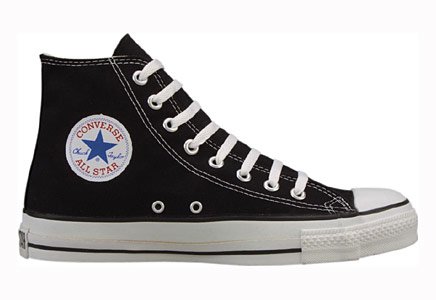
Converse….

The main stay of the lifting community, now perhaps more of a fashionable shoe than a training shoe. The value of converse with a stable base with a flexible mid-foot shows its use for lifting weights as a flat shoe. In more dynamic work the coarser upper material is less than ideal for movement, specifically with the high top version. For those with wide feet it can also be an issue.

Neutral Running Shoes…

Can be useful for those who may need a bit more support. The main issue with any type of running shoe is the issue of an elevated heel lift, as discussed before this can cause increased heel contact time which may not be desirable when looking to encourage a more natural forefoot running pattern with less ground contact time. For those in the gym it can provide a suitable amount of support if your arches/ ankles are weak and is a good transition shoe if you have been training a more heavily supported shoe. Often our clients have orthotics which may be necessary for some individuals especially if they are not going to invest the time in some barefoot training drills. Therefore, I would tend to favour a neutral running shoe with a customized orthotic opposed to a heavily supported running shoe as it will be more personal to the individual’s needs as this will also help preserve knee alignment and give support where necessary. The orthotic can also be adjusted over time if barefoot training drills are undertaken to improve lower body strength. This is often what I recommend for runners- with a more minimal shoe for gym work and occasional runs.

Nike Free…

I have a couple of pairs of Nike Free’s myself and think they are great as any everyday shoe. There are a number of models with varied heel lifts a higher heel lift in the 5.0, 7.0 and “Run” versions so their benefits as a minimal shoe now are not as great in comparison to the 3.0 which has a lower heel lift. I also find the added heel lift with minimal medial support not in line with the ideals of barefoot training in the sense of developing and allowing full range of motion at the ankle. The light weight nature of the show though makes them suitable for gym work especially if you can find some of the earlier models though they make a decent everyday shoe even if they can get beat up pretty quickly.

Vibram…

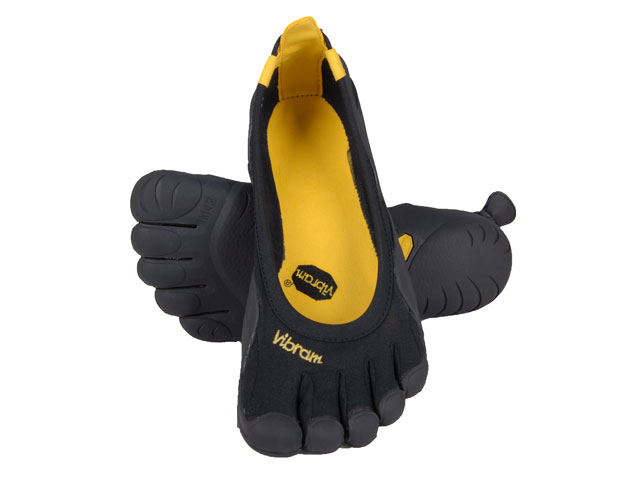
Perhaps the weirdest looking of the shoes as the illustration suggests these shoes are akin to wearing a more durable glove for your foot. Fundamentally they are very comfortable though their base is pretty thin meaning if you have sensitive feet you may have to build up to using them outside. The Vibrams is a great shoe if you really want to get the feel of being barefoot. The feeling on your feet is akin to grabbing hold of the floor with your feet and therefore when working on a single leg you really feel everything working from the foot upwards. I generally use these every other day for work (indoors) and training. Anecdotally, I have tried a light amount of running in them but believe that there may be better options especially if looking to elevate the amount of training you do. That said as part of your footwear for training they are a really useful addition.

Merrell…

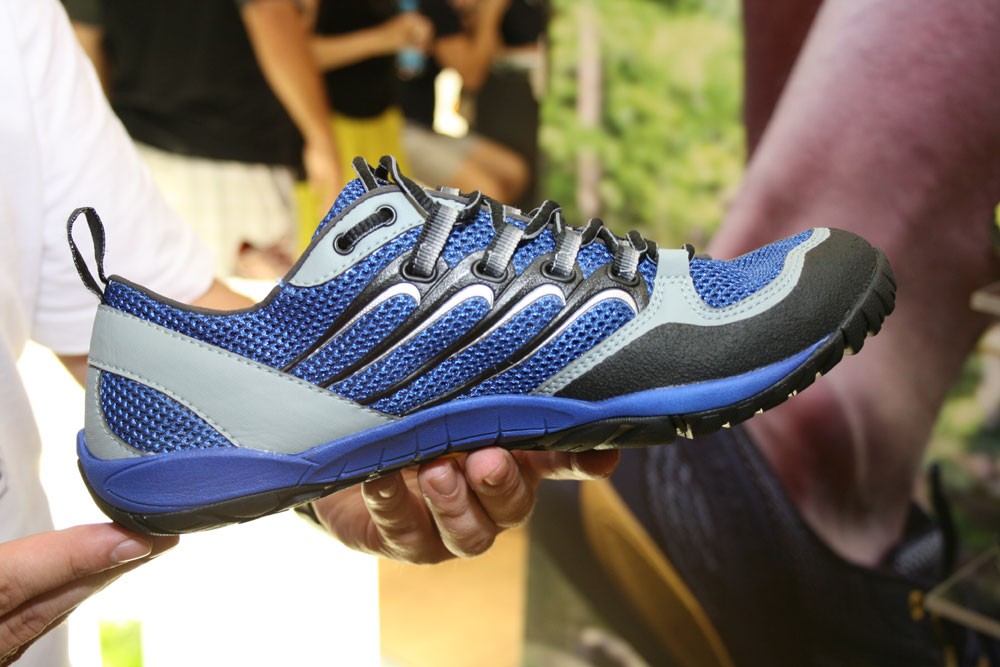
Introduced to me by one of my clients the Merrell barefoot shoe combines the feel of the sole of the Vibram with the appearance of a normal shoe. One of my training clients told me that this was the evolution of shoes and that my Vibrams where now where irrelevant as at least you could wear these outside with “normal” people- the Merell incidentally has a Vibram sole which I didn’t mention to him. The Merrell shoe is a great option for a minimally constructed shoe for those who want a more normal looking covered shoe; it was going to be my favoured selection until….

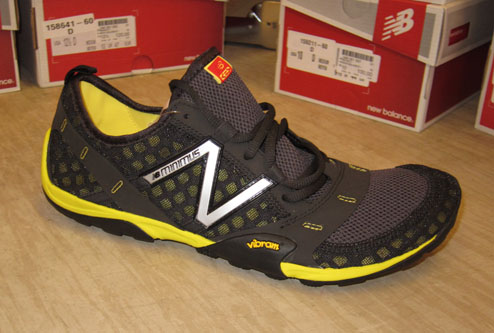
New Balance Minimus…

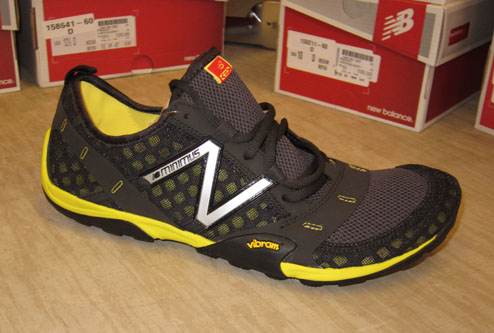
I had a preview of this from Eric Cressey’s blog, realizing they were not available in this country… until one of my colleagues managed to get me a pair through a contact in the States! The New Balance shoe has a sole made by Vibram with a full upper like the Merell. It’s very comfortable to wear and has the appearance of a climbing shoe. Some of the other models almost look like more durable versions of the early Nike Free. It just edges the Merell in looks with the upper feeling a bit more flexible on the upper foot and is great for dynamic work in the gym, short distance speed work and occasional short distance running.

Barefoot Training and Trainer Choice: Part 1.

Two months ago I had ankle surgery which after two years of nursing an ankle instability issue gave me an even greater interest in understanding the foot and ankle complex. Trainers are something that I spend about 90% of my life wearing so it is important for me to get my footwear choices right- especially when looking to get my own training back on track and rehab an injury.

A question also that we often get asked by our training clients is “What trainer should I buy to train in?” This is often followed by a look down at our footwear- followed by “Should I buy those or should I buy a running shoe?”

A bit of a back story is necessary here to set the scene. Running trainers with support, motion control technology; special fabrics etc. may not necessarily be the best thing to wear when training. A lot of these technologies block movement at the ankle joint. Effectively shutting down range of motion and not allowing the foot to adapt naturally to movement. For a more in relation to running this website provides a great reference: http://www.barefootrunning.fas.harvard.edu/index.html

The question posed is that mid-foot to forefoot striking may be more desirable from a joint health perspective then to heel striking or absorbing force with your heel initially. What does this mean? Well, a lot of trainers have an elevated heel lift which causes heel contact ahead of mid-foot or forefoot strike when someone’s natural running style is unsuited to this method of movement.

This is twinned with another issue from structured running shoes. If we have a lot of medial support (typically in the mid foot area as a harder material or bar) it effectively blocks prontation (the movement of the foot inwards that happens directly after ground contact). So if we need support against pronation it is a good thing, how many people need extra support though? I have been lucky enough to work with dynamic gait analysis with pressure pads and excessive pronation can be an issue. However, the question is why do individuals have excessive pronation and what are the measures that we can counter against this apparent weakness? Well the recommendation that you go straight in to a support shoe is not always right. This again is about treating the cause rather than the effect. If the foot excessively prontates then often it is a question of stability and strength at the ankle. A point to note also is that in the case of shoe shops with “gait” analysis the instant reaction is “You are a pronator- you need a shoe that supports against pronation.” Most of these tests are performed visually or in static (on a pressure pad). Most people who “pronate” will pronate on contact before is transferred to the lateral foot before rolling back out through the toe. This is often the case as well if someone has flat feet- the assumption is that their foot will fall in on ground contact. Dynamically often though the arch of the foot may lift and the forces will display closer to a foot with a natural arch. Simply putting someone in a trainer and saying “off you go” is poor advice- similar to putting a new wheel on the car but only attaching one bolt to keep the tyre on.

Barefoot training and minimal shoe training is the smart move if you want to build up to running distance. This does not mean go out and wear flats all day every day and run barefoot. It means that building barefoot training and wearing minimal footwear can help build strength and stability at the ankle and lower limbs before running. In this sense the ankle has to remain stable in to prontation meaning the ankle is stronger at its initial contact point. Is barefoot running therefore recommended for everyone?

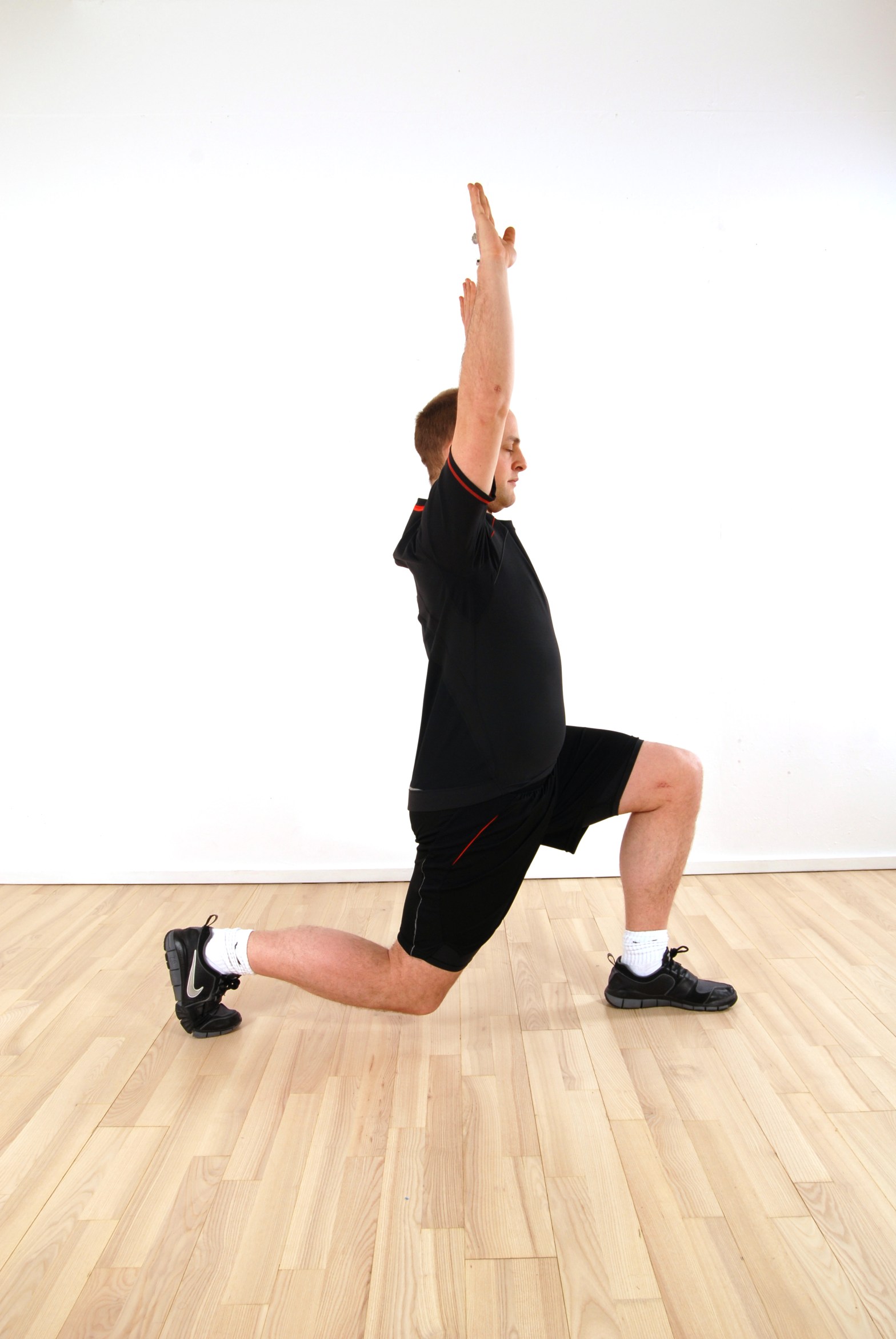
Well no- a lot of people will run without suitable strength not just at the ankle but through the knee, hip and lower back. Making sure that someone is structurally strong is important otherwise a minimal shoe may decrease the base of support further for the individual possibly leading to injury. This means that if someone is not proactive about building a better base to their strength levels then supported trainers will become effectively a “crutch” to lean against. After developing suitable structural strength then introducing a minimally supported shoe would be a good progression. This works brilliantly for single leg work such as lunge variations and single leg deadlifts. In these exercises the foot will try to grip with the big toe which will lift your foot arch in turn developing stability at the ankle on ground contact.

Barefoot movement drills such as shuffles and sidesteps can then be added to training, the key with these is learning to absorb force at the mid and forefoot. This can be quite harsh on your plantar fascia (the base of your foot) initially though rolling your foot on a tennis ball can help relieve tension.

Barefoot running is the next step; consider the fact that for year’s sprinters spikes and middle distance athletes have been using a minimally supported shoe. This does not validify their use but there has been no change in injury occurrences in the lower limb due to structured support trainers as discussed in the Harvard research cited. Either way if you are considering a minimal shoe to run in then I am presuming that you will be pretty switched on to having suitable postural balance, taking adequate measures to develop your strength levels and have a structured running programme with variations in intensities and volumes allowing you to introduce minimal shoe training sessions steadily without excessive volume. If you are looking for a gym shoe that will give good carryover to more effective training then you may also be interested in purchasing a minimal training shoe

So what are the options? I’ll review some of the contenders in my next post….